

STONE AND FIRE INTERIOR
Batumi, Georgia
2024
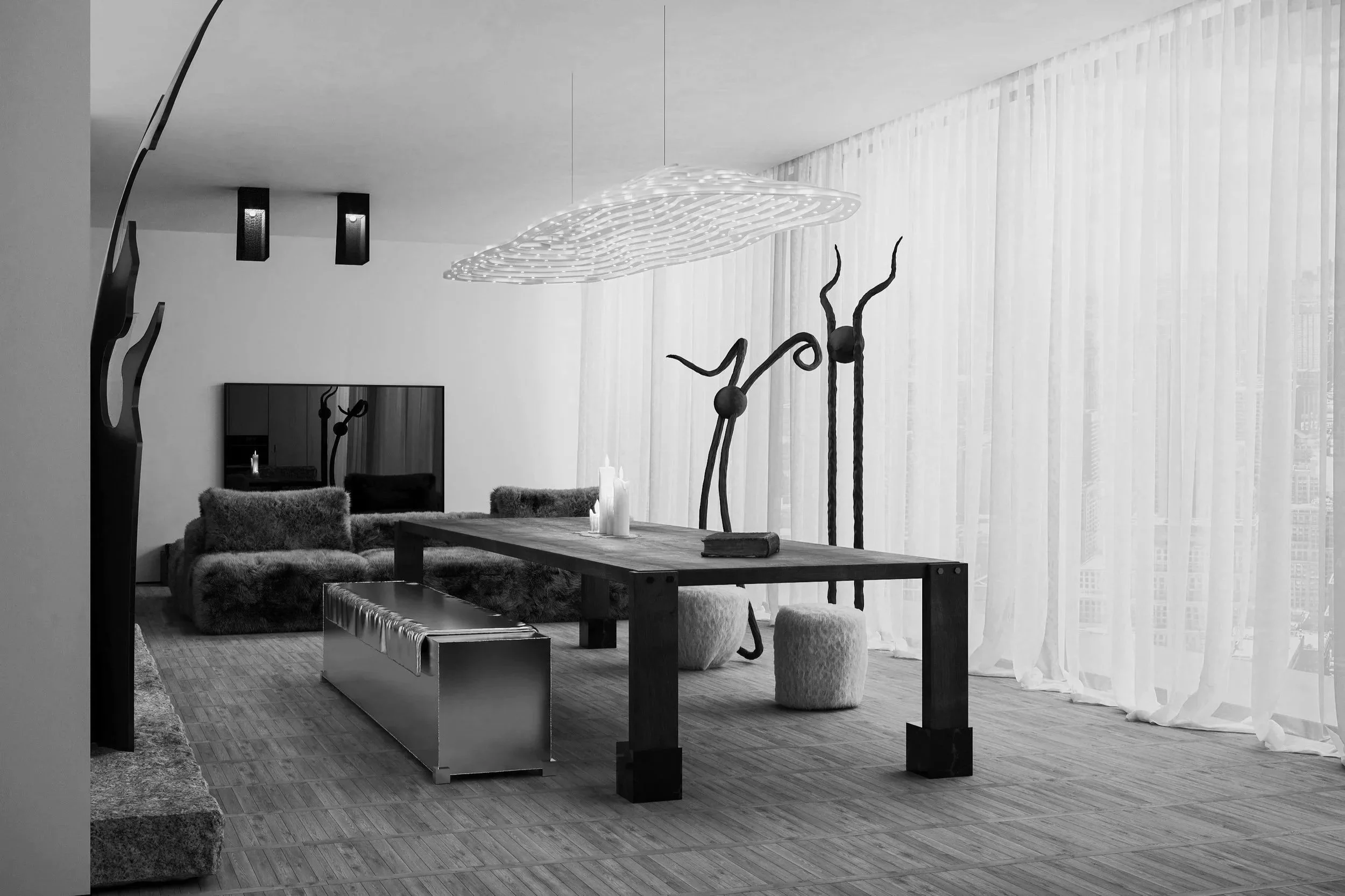
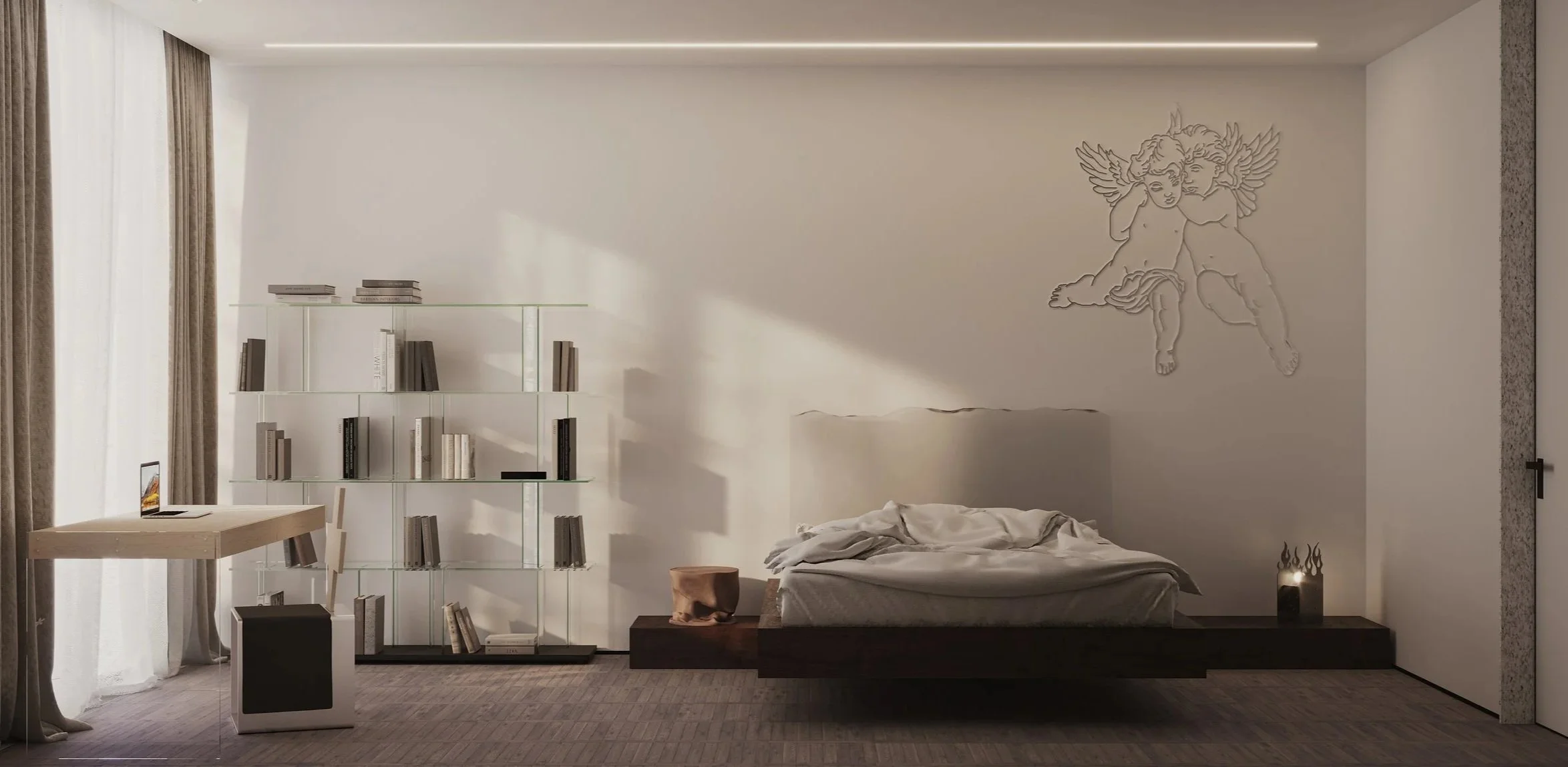
The interior is conceived as a dialogue between raw natural materials and restrained architectural space. Stone, wood, and black metal form the primary material language, creating an atmosphere where primitive textures coexist with contemporary minimalism.
Massive stone elements play a central role in the composition. The kitchen island and sculptural sinks introduce a sense of weight and permanence, grounding the interior within a tactile material presence. These elements contrast with the precision of the architectural space and emphasize the physical character of natural materials.
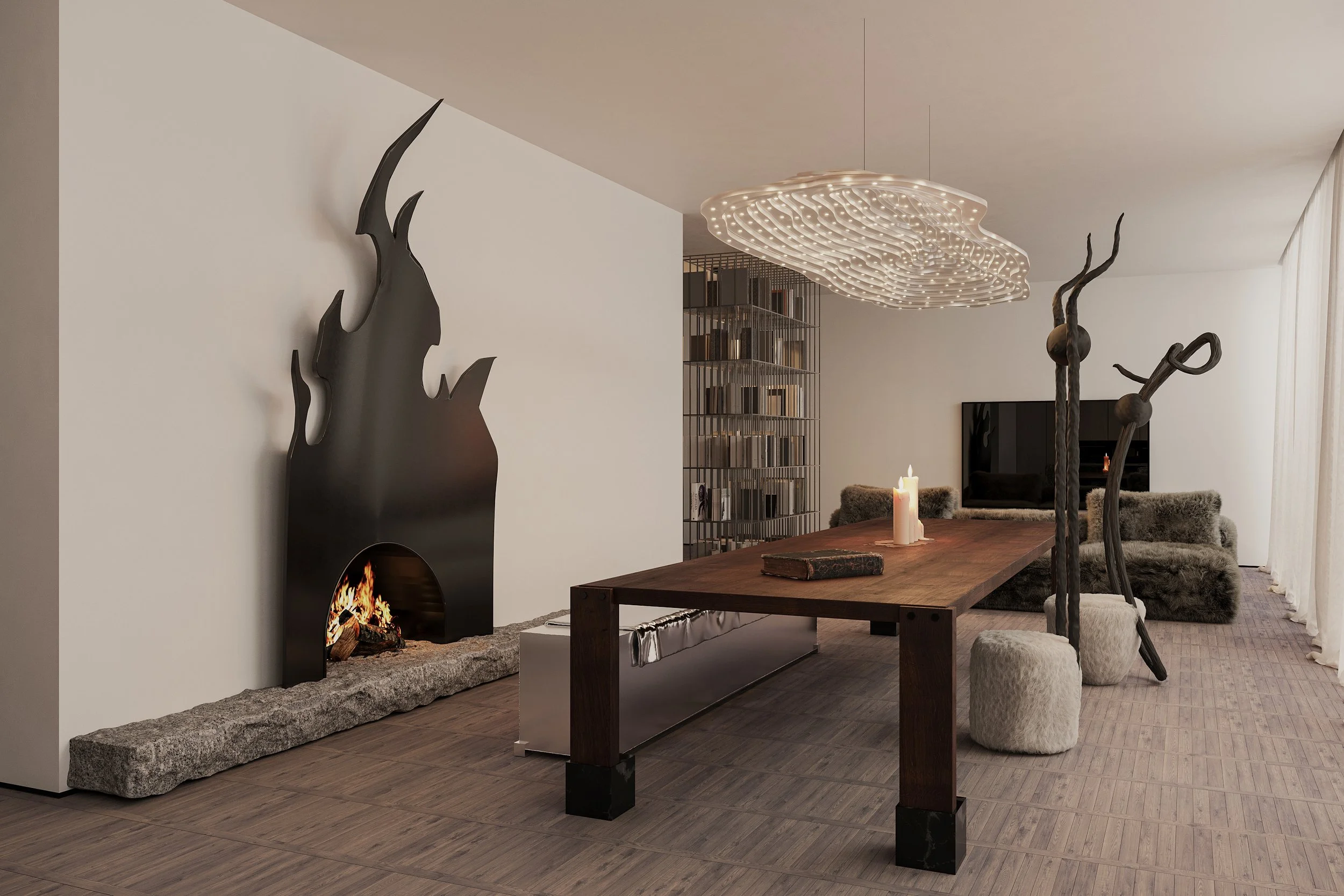
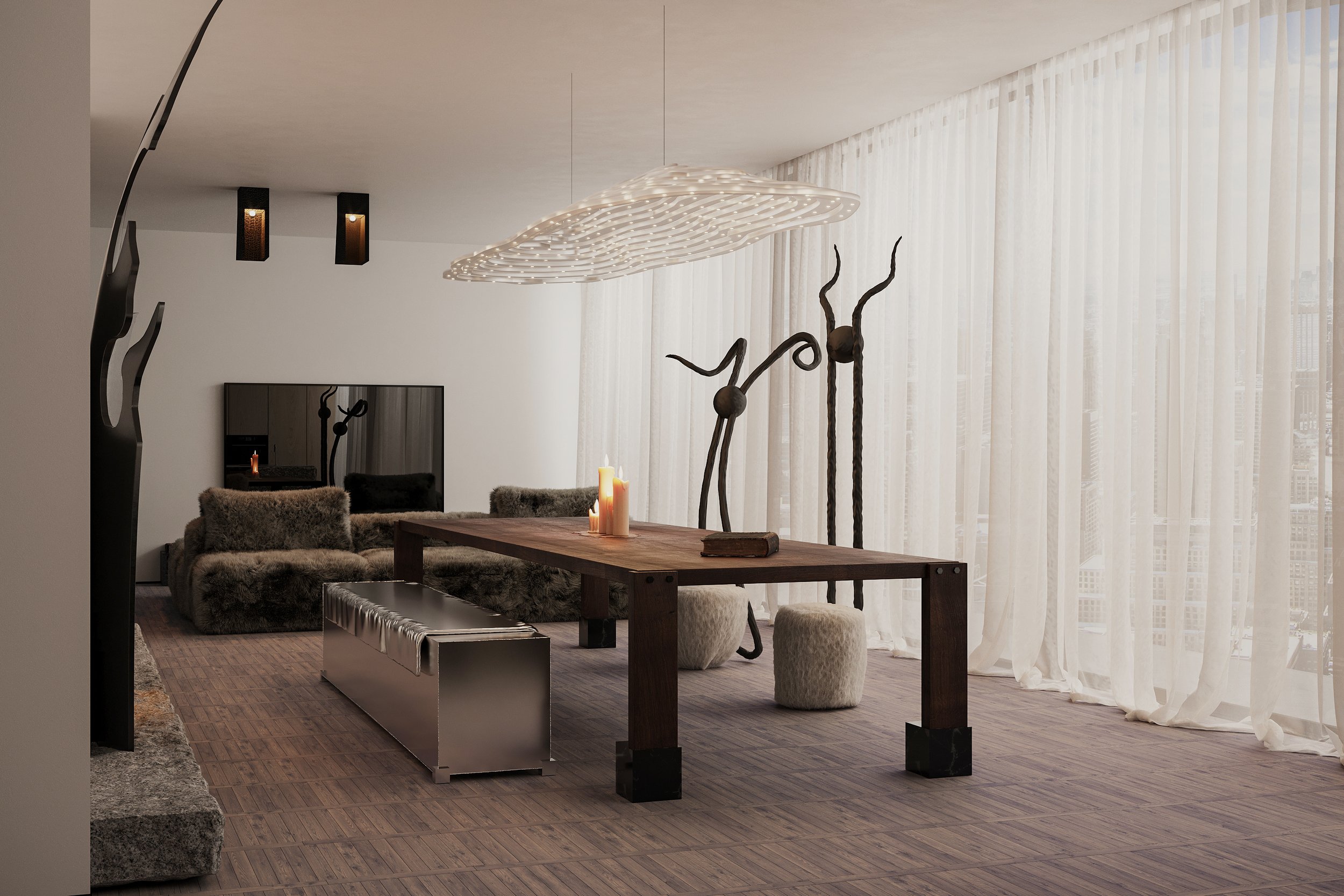
The interior space is organized as a continuous open environment where living, dining, and kitchen areas flow into one another. Large windows allow natural light to move freely through the rooms, softening the material contrasts and strengthening the connection between interior space and the surrounding landscape.
Sculptural elements introduce a conceptual layer to the interior. The fireplace, with its expressive silhouette, becomes a spatial focal point, while lighting installations function as suspended compositions that animate the ceiling plane. The interior also integrates collectible design and sculptural objects that function as spatial accents within the architectural composition.
The result is a space defined by balance between weight and lightness, raw texture and controlled geometry. Architecture, material, and art merge into a unified interior environment.
Program: Interior
Client: Private
Lead architect: Zurab Arabidze
Project team: Zura Chanukvadze, Maka Maisuradze, Aleksey Ershov,




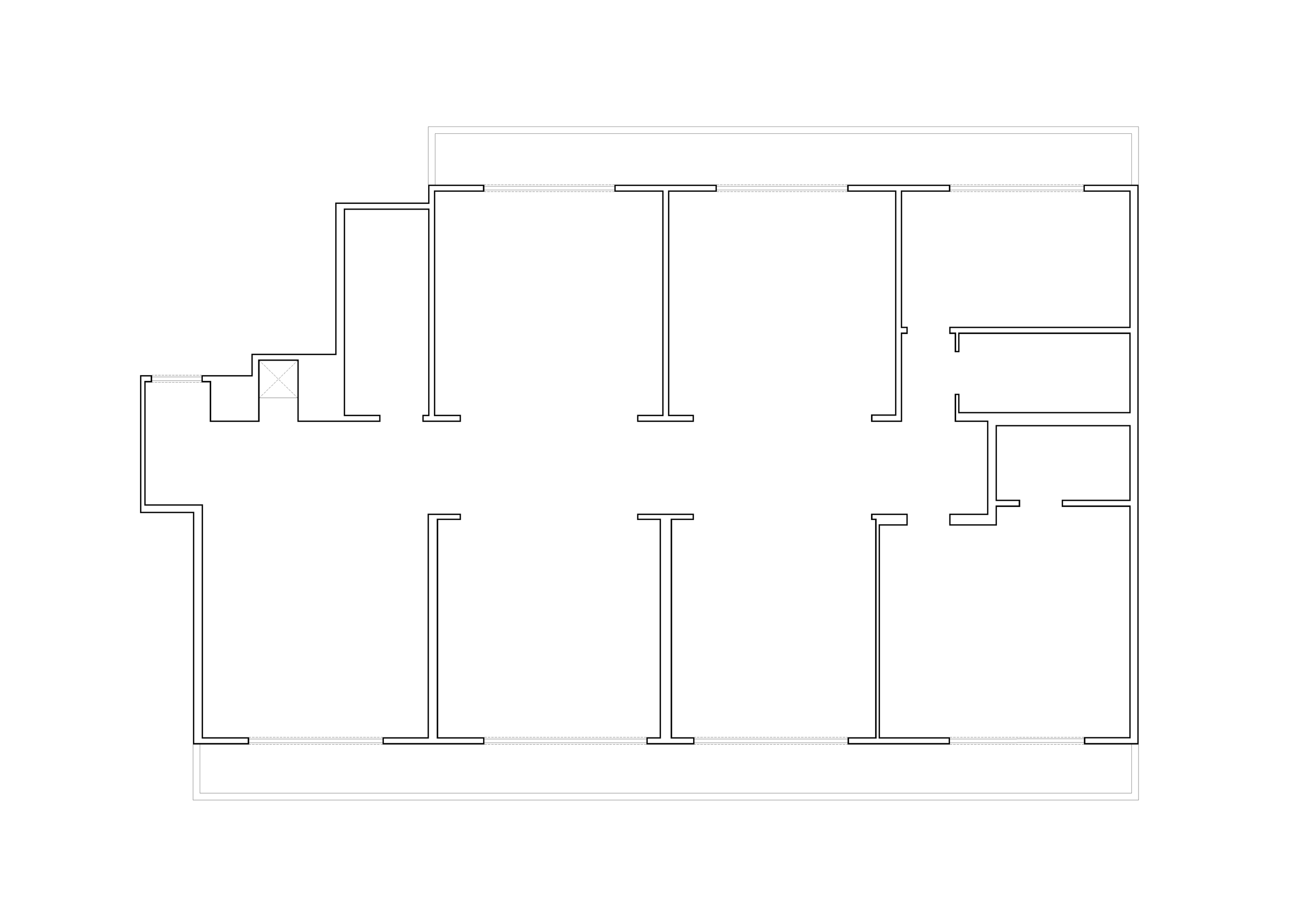
DRAWINGS
LIVING AREA : 230 M2 - TERRACES AREA : 26 M2 - ROOMS : 4

BATUMI
Batumi is a coastal city located on the eastern shore of the Black Sea and serves as the main urban center of Georgia’s Adjara region. Positioned between the sea and the mountainous landscape of southwestern Georgia, the city is defined by the strong presence of both natural and urban environments.
The historic center of Batumi is characterized by early twentieth-century architecture and a dense urban fabric, while newer districts reflect the city’s contemporary development. Modern buildings stand alongside historic structures, forming a layered cityscape shaped by the sea, subtropical vegetation, and the surrounding mountain horizon.
